Investing in Agribusiness: Building Value Chain Excellence in Africa

Investing in agribusiness in Africa involves far more than acquiring farmland or producing crops. The agribusiness value chain in Africa connects input suppliers, farmers, processors, transport providers, financiers, distributors, retailers and consumers. Every stage creates opportunities to improve productivity, add value and build commercially sustainable enterprises.
However, agricultural potential does not automatically result in successful investment. Agribusiness leaders must understand how products move from the farm to the final market, where value is created or lost and how decisions made at one stage affect the rest of the chain.
The Africa Agribusiness Value Chain Excellence Programme is designed to help agribusiness leaders, entrepreneurs and value chain professionals strengthen their understanding of production, agro-processing, finance, market access and emerging agricultural technologies.
What Is the Agribusiness Value Chain in Africa?
An agribusiness value chain includes all the activities and organisations involved in moving an agricultural product from its original source to the final consumer. It begins before a seed is planted and continues after the finished product reaches a retailer, restaurant, manufacturer or export market.
A typical agricultural value chain may include:
- Seed, fertiliser, equipment and agricultural input suppliers;
- Farmers, growers and livestock producers;
- Storage, aggregation and collection services;
- Food processors and manufacturers;
- Packaging, quality assurance and certification providers;
- Transport, cold-chain and logistics companies;
- Wholesalers, exporters and retailers;
- Banks, insurers and agricultural finance providers;
- Consumers in domestic, regional and international markets.
These participants depend on one another. A failure in storage, transport, finance or market access can reduce the value created during production. Strong agricultural value chain management therefore requires a complete view of the system rather than a narrow focus on farming alone.
Why Invest in Agribusiness in Africa?
Agriculture is closely connected to employment, household income, food security and economic development across Africa. At the same time, population growth, urbanisation and changing consumer preferences are increasing demand for safe, reliable and convenient food products.
These trends create opportunities for enterprises that can improve agricultural productivity, reduce losses, process raw commodities and connect producers with growing markets.
According to InvestSA’s agribusiness sector overview, the sector includes strong connections between agricultural production and activities such as equipment, packaging, logistics, processing, wholesale and retail.
This means investors do not necessarily need to own or operate a farm. Opportunities are available throughout the value chain, from agricultural technology and specialised finance to processing, storage and distribution.
Key Agribusiness Investment Opportunities in Africa
1. Agricultural Inputs and Farm Services
Agricultural productivity depends on access to appropriate inputs, equipment and professional support. Businesses can provide seeds, fertiliser, irrigation systems, machinery, soil testing, veterinary services and technical advice.
Equipment rental and shared-service models can also create value by allowing smaller producers to use modern machinery without carrying the full cost of ownership.
2. Primary Production
Crop, livestock, aquaculture and horticultural production remain central to the agribusiness value chain. However, potential investors need to consider climate conditions, water access, production costs, technical expertise and the availability of reliable buyers.
Production decisions should be based on clear market demand. Producing a high-quality commodity may not be commercially sustainable without a dependable route to market.
3. Agro-Processing and Value Addition
Agro-processing transforms raw agricultural products into goods that are more useful, convenient or valuable. Examples include turning grain into flour, fruit into juice, milk into cheese or fresh produce into packaged food products.
Value addition can extend shelf life, reduce reliance on unprocessed commodity sales and create employment in manufacturing, packaging and distribution.
4. Storage and Cold-Chain Infrastructure
Agricultural products can lose quality and value quickly when appropriate storage is unavailable. Perishable products are especially vulnerable to heat, delays and poor handling.
Warehouses, silos, packhouses, cold rooms and refrigerated transport can help producers maintain product quality, extend selling periods and reach buyers located farther away.
5. Agricultural Logistics and Distribution
Transport links farms with processors, wholesalers, retailers and consumers. Investment opportunities may exist in rural collection services, route planning, fleet management, refrigerated delivery and digital logistics platforms.
Efficient distribution reduces delays and allows agricultural enterprises to respond more accurately to changes in market demand.
6. Agricultural Technology
Technology is changing how agricultural enterprises plan production, manage resources and reach customers. Relevant solutions include digital farm-management systems, drones, artificial intelligence, precision farming tools, traceability platforms, remote sensing and Internet of Things devices.
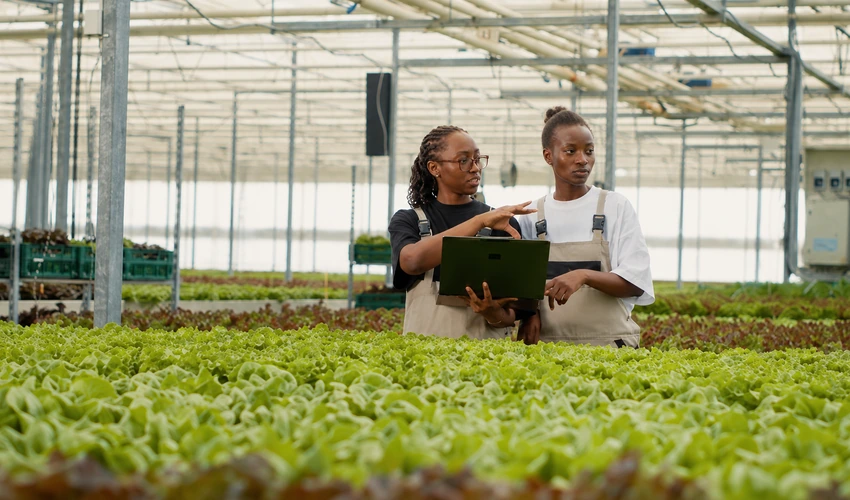
The strongest agritech investments address a clearly defined operational challenge. A technology solution should improve productivity, lower costs, strengthen traceability or provide information that users can apply in practice.
7. Agricultural Finance and Insurance
Agribusinesses often require funding before they generate revenue. Producers may need working capital for inputs, while processors and logistics companies may require finance for equipment and infrastructure.
Investment opportunities may exist in specialised lending, asset finance, supply-chain finance, crop insurance and funding models that account for agricultural production cycles.
8. Regional Trade and Export Market Access
African agricultural businesses can create additional value by serving regional and international markets. However, market expansion requires knowledge of pricing, product standards, export documentation, packaging, certification and buyer expectations.
Businesses that understand regional trade and market intelligence may be better positioned to identify suitable buyers and develop competitive products.
What Does Value Chain Excellence Mean?
Value chain excellence means managing the complete agricultural system so that each stage contributes to quality, efficiency, resilience and customer value. It cannot be achieved by improving one activity while ignoring weaknesses elsewhere in the chain.
An effective agribusiness value chain usually demonstrates:
- Clear product quality and food-safety standards;
- Reliable relationships between producers, suppliers and buyers;
- Accurate production, demand and inventory information;
- Efficient storage, transportation and distribution;
- Transparent pricing and commercial agreements;
- Responsible environmental and social practices;
- Effective risk and disruption management;
- A clear understanding of the final customer.
Investors should therefore evaluate more than the financial potential of an individual business. They should also examine the strength of its relationships with suppliers, customers, financial institutions, regulators and service providers.
The Role of Climate-Smart Agriculture
Agricultural enterprises operate in an environment affected by drought, flooding, soil degradation, water scarcity and changing weather patterns. Climate-smart agriculture seeks to improve productivity while strengthening resilience and using natural resources responsibly.
Approaches may include regenerative farming, improved soil management, efficient irrigation, water conservation, crop diversification and data-supported production planning.
Investors should consider whether an agricultural enterprise can adapt to environmental change and continue operating under increasingly uncertain conditions.
Risks to Consider Before Investing
More Than a Course. A Career Move.
Global accreditation, real outcomes, see why learners choose Digital Regenesys.
Explore ProgrammesClimate and environmental risk
Drought, flooding, pests, heat and changing rainfall patterns can affect production volumes and product quality. Investors should assess water security, climate resilience and suitable risk-management measures.
Infrastructure risk
Unreliable electricity, poor road access and inadequate storage can disrupt agricultural operations. The cost of addressing these limitations should form part of the investment decision.
Market and price risk
Agricultural prices may change because of supply, demand, exchange rates, imports and international market conditions. Diversified buyers, value-added products and long-term commercial agreements may reduce exposure.
Regulatory and compliance risk
Agribusiness investors need to understand food-safety requirements, environmental regulations, labour obligations, land-use rules and import or export requirements in the relevant market.
Management and execution risk
A promising business concept may still fail because of weak management, poor financial controls or limited technical expertise. The capabilities of the leadership and operational teams should therefore be carefully evaluated.
Why Agribusiness Partnerships Matter
Few organisations can control every stage of an agricultural value chain independently. Collaboration between producers, governments, investors, processors, financial institutions, research organisations and market partners is often necessary.
The FAO and African Union Commission guide to agribusiness partnerships explains how coordinated public and private investment can combine resources, share risk and support inclusive agricultural transformation.
Successful partnerships require clearly defined responsibilities, measurable objectives and transparent decision-making. They should also consider how smaller producers and local communities can participate in and benefit from the value chain.
Skills Needed to Lead Agribusiness Value Chains
Agribusiness leadership requires a combination of agricultural knowledge, commercial awareness and strategic decision-making. Professionals must be able to analyse the entire value chain while managing finance, operations, people and markets.
Important capabilities include:
- Value chain mapping and analysis;
- Primary production and farm-management knowledge;
- Agro-processing and value-addition planning;
- Financial analysis and investor readiness;
- Market research and trade intelligence;
- Supply-chain and logistics management;
- Risk assessment and resilience planning;
- Stakeholder engagement and negotiation;
- Climate-smart agricultural practices;
- Agritech and digital transformation.
These capabilities are relevant not only to farmers but also to investors, policymakers, bankers, processors, consultants and development professionals working across food and agriculture.
Who Can Benefit from an Agribusiness Value Chain Programme?
Structured agribusiness training may be valuable for:
- Farmers and agricultural entrepreneurs;
- Stockists, input suppliers and agro-dealers;
- Aggregators and agro-processors;
- Agritech innovators and digital-platform owners;
- Bank loan and agricultural credit officers;
- Cooperative leaders and extension officers;
- Government and economic-development officials;
- Development partners and NGO professionals;
- Aspiring agribusiness entrepreneurs.
Developing Practical Agribusiness Expertise
Agribusiness training should connect strategic thinking with practical agricultural operations. Professionals need opportunities to examine real value chains, understand investment decisions and learn how production, processing, finance and market access work together.
The Digital Regenesys programme combines hybrid executive learning with industry immersion. Its curriculum covers primary production excellence, value addition, agro-processing, agribusiness finance, market access, trade and emerging agricultural technologies.
The learning experience is intended to help participants develop practical strategies for strengthening agricultural productivity, investor readiness, sustainable growth and access to regional and international markets.
Next Course Intake Starts Soon
Join thousands building future-ready skills with Digital Regenesys.
Enrol NowPrepare to Lead Across Africa’s Agribusiness Value Chain
The future of African agribusiness will depend on leaders who can connect agricultural potential with commercially sound execution. These leaders must understand the entire journey from primary production to processing, finance, technology and market access.
The Africa Agribusiness Value Chain Excellence Programme equips participants with practical value chain knowledge, investor-readiness strategies, market access frameworks and exposure to emerging agricultural technologies.
By strengthening value chain expertise, professionals can identify better investment opportunities, manage risks more effectively and contribute to agricultural enterprises that are commercially viable, inclusive and sustainable.
Last Updated: 3 August 2026