Can I Study Digital Marketing for Free?

Thinking about stepping into digital marketing and wondering whether you can start learning at no cost? It’s a common question. The good news – there are several ways to begin without spending anything.
This early exploration often helps you understand your strengths before moving on to structured learning. The free resources give an introduction to concepts like SEO, social media planning, and content creation.
Free materials are easy to access, self-paced and helpful for building confidence when you’re still exploring your career direction. However, once you move past the basics, you’ll find that the field demands structured learning, real practice and the skill to apply concepts on actual projects.
This is where paid training becomes essential, especially if your goal is a job-ready skill set that employers trust.
In this article, you’ll see how free study fits into your learning journey and where structured courses make a meaningful difference.
Can You Study Digital Marketing for Free?
Yes, you can study Digital Marketing for free, especially at an introductory level. Many online sources offer beginner-friendly lessons, video explanations and step-by-step tutorials. These materials help you learn at your own pace and build a foundation in the core areas.
Here are commonly used types of free learning platforms:
1. Video-based learning platforms
These platforms offer thousands of free videos where creators break down Digital Marketing concepts in simple language. You’ll find explanations on social media strategy, basic analytics, advertising terms, content writing techniques and more.
This format is convenient for visual learners and ideal when you want a quick introduction to a topic without committing to a formal course. However, content quality varies, and learning paths are not always structured.
2. Free online learning libraries
Some websites publish articles, downloadable guides and open toolkits. These cover areas such as keyword research, campaign planning, user behaviour and website basics. The strengths of these libraries lie in their accessibility and breadth of topics.
They help you explore multiple areas to see which skills interest you most. Their limitation is the lack of practical tasks or feedback from industry professionals.
3. Open-access digital marketing lessons
Several platforms offer free introductory modules or short-form lessons created by marketing practitioners. These focus on fundamentals like search visibility, online advertising, content calendars and user engagement.
While they provide clarity on essential concepts, they rarely include real assessments, campaigns or portfolio-building activities.
4. Self-study communities and forums
Discussion communities offer informal learning through shared experiences, tips and problem-solving threads. Beginners can learn from others’ questions, explore best practices and understand how experts approach challenges.
These communities are supportive but do not replace a structured curriculum or guided supervision when learning more advanced topics.
5. Free self-paced Digital Marketing resources
Many websites host free self-study Digital Marketing materials where you choose what to learn and move through topics according to your own timeline.
These are ideal when you want flexibility and don’t yet need certification. However, relying only on free self-study digital marketing learning can create knowledge gaps.
Read More: Why Learn Digital Marketing?- Increasing Demand for Digital Marketing Roles!
Turn Marketing Skills Into Real Growth
Learn AI-driven SEO, content & automation for campaigns that actually convert.
Explore ProgrammeAre Free Resources Enough for a Career?
Free learning options are helpful when you’re starting out, but they don’t always cover the depth needed for real workplace tasks. Digital roles require more than basic theory, and they demand the ability to plan campaigns, analyse results and work confidently with modern tools. Digital Regenesys supports this progression with practical, industry-aligned learning.
Here’s where free learning usually falls short and why structured training becomes essential:
- Free lessons rarely include hands-on practice with tools used in professional roles.
- There is limited feedback, making it difficult to correct mistakes or improve.
- Learning paths are unstructured, which creates gaps in understanding as you advance.
- Free resources do not offer recognised certification that employers rely on.
- Portfolio-building tasks are often missing, which makes job applications more challenging.
Why Consider Structured Learning After Free Study?
Free resources are a practical way to test your interest and understand the basics, but they don’t always prepare you for real-world responsibilities. As you progress, you may notice gaps in your skills.
When it comes to campaign execution, analytics or working with AI-powered tools, you may feel that you are lacking something. This is where structured learning becomes valuable.
Below are the areas where structured training provides meaningful advantages:
1. Clear learning paths and expert guidance
A structured course gives you a roadmap instead of leaving you to guess what to study next. You move through topics in a logical order.
A proper structure ensures you understand the foundations before tackling advanced skills. Experienced faculty support your progress, explain industry concepts in simple terms and help you avoid common mistakes.
2. Hands-on practice with real tools
Most free resources focus on theory, which can feel limiting once you try to apply your knowledge. Employers, however, expect you to know how dashboards, analytics tools and campaign managers work.
Structured learning provides guided practice on these platforms so you can see how the concepts operate in real time. It bridges the gap between knowing and doing.
3. Portfolio-building assignments
One of the biggest challenges learners face is proving what they can do. Free resources don’t always include assignments that display real-world capability.
Structured training offers practical tasks such as building campaigns, writing creative briefs, analysing performance reports or creating short-form videos.
4. Support in understanding AI tools
AI is now part of daily marketing tasks, from content creation to audience insights. However, understanding how to use AI properly requires more than casual exposure.
A structured course teaches you how to apply AI tools safely, interpret outputs and maintain human judgement in every step. You learn where AI can speed up tasks and where oversight is essential.
5. Recognised certification
Most free learning platforms don’t provide credentials that employers recognise. A structured, accredited course adds credibility to your profile and demonstrates that you have completed formal training. Employers often use certification as a way to shortlist candidates, especially for entry-level positions.
Read More: What are the benefits of enroling in a short digital marketing course for quick skill enhancement?
Where Digital Regenesys Fits In?
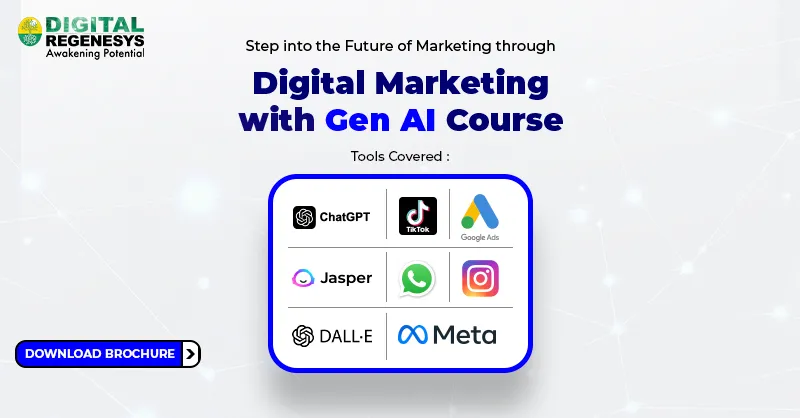
Digital Regenesys offers a Digital Marketing course with Gen AI designed for learners who want practical skills. The course balances essential theory with real assignments to help you build a strong foundation while gaining hands-on experience.
The course covers areas such as:
- Campaign setup and planning
- Analytics and performance measurement
- Content creation and creative briefs
- Short-form video production
- AI-supported workflows
- Digital strategy fundamentals
This holistic approach guarantees you not only understand Digital Marketing but can also apply it effectively in real environments.
Can You Start for Free and Then Move to Paid Learning?
Absolutely. Many learners begin with free materials to build confidence, then transition to structured training to become career-ready. This approach works well because it allows you to understand the basics before deciding how far you want to take your skills.
Here’s why many learners eventually move from a free Digital Marketing course online to paid training:
- A deeper learning structure: Free content introduces concepts, but structured training provides organised lessons that build real competence.
- Practical experience with real tools: Employers expect hands-on ability, which free resources rarely give you.
- Guidance from experts: Instructors help you apply concepts correctly, which reduces confusion and strengthens your understanding.
- Portfolio development: Paid courses include practical tasks that help you build real examples of your work for recruiters.
- Recognised certification: Formal training gives you credentials that employers consider.
Read More: Why online digital marketing courses are a popular choice for remote learners?
Next Digital Marketing Batch Starts Soon
Join 500,000+ alumni turning AI marketing tools into a career advantage.
Enrol NowConclusion
You can definitely study Digital Marketing for free, and doing so is a practical way to explore the field. Free videos, articles and tutorials help you understand the basics and learn at your own pace.
However, if your goal is a professional career, structured learning becomes crucial. Digital Regenesys provides a complete Digital Marketing course with Gen AI that builds real skills and prepares you for industry expectations.
Begin your Digital Marketing journey with confidence; Enrol with Digital Regenesys today.
Last Updated: 6 February 2026