Cybersecurity Course Eligibility in South Africa: Follow this Career Path to Success

The demand for cybersecurity professionals in South Africa is increasing as digital threats continue to proliferate across various industries and government sectors. If you are exploring cybersecurity course eligibility in South Africa, it is important to know that these programmes are open to a wide range of learners, not just those with a strong technical background. Many courses accept school leavers with a foundation in mathematics or computer studies, while others are tailored for graduates or working professionals looking to advance their careers or change direction.
Eligibility for these courses is not limited to those with advanced technical backgrounds; individuals with a passion for problem-solving, attention to detail, and a willingness to learn are also welcome to apply. Some programmes welcome school leavers with a solid foundation in mathematics or IT, while others are designed for professionals who want to upskill or change their career direction.
Eligibility Requirements by Qualification to do a Cybersecurity Course in South Africa?
When planning your future in cybersecurity, it is essential to know the cybersecurity course eligibility in South Africa. Different qualifications ask for different levels of preparation, but the options are designed to suit both beginners and experienced professionals. To make a sustainable career in Cybersecurity, one can get started by enrolling on an online Certification Course in Cybersecurity that gives a globally recognised certification, which will give professional validity and practical values.
Below is a simple breakdown of what you can expect:
Certificate Level Courses – Usually open to anyone with a matric certificate. Subjects such as mathematics or computer studies are often recommended, but not always compulsory. These courses build your basic knowledge and introduce you to essential cybersecurity concepts.
Diplomas and Advanced Programmes – These often require prior study in IT, computer science, or related fields. Some providers may also accept candidates with strong work experience in technology, even if they lack formal qualifications.
Undergraduate Degrees – Typically, you need a matric with a good pass in maths, science, or computer-related subjects. Universities may also assess your overall academic record.
Professional Certifications – Entry depends on a technical background or prior work experience, with many certifications designed for individuals already in IT roles.
Meeting these cybersecurity career eligibility in SA pathways ensures you select the right level of study, build confidence, and create a clear route towards a future in this fast-growing profession.
Cybersecurity Course Skill-Based Entry Requirements in SA
When considering cybersecurity course eligibility in South Africa, many institutions now provide alternative pathways through skill-based entry. This allows learners without formal qualifications to showcase their strengths and still access recognised training.
The following requirements need to be carried within oneself to pass the skill-based entry for the cybersecurity course in South Africa:
1. Understanding Skill-Based Entry
When it comes to cybersecurity course eligibility in South Africa, not everyone has the same academic background, and that should not stop them from pursuing this career. Many institutions now allow skill-based entry, which means that if you have the right abilities, practical exposure, or work experience, you can still qualify for a course even without traditional qualifications.
2. Computer Literacy
Strong computer literacy is often the very first step. This does not mean you need to be an expert programmer. It means being confident in using computers, understanding basic applications, and solving minor everyday IT issues. If you can work with software comfortably and know your way around technology, you already meet this expectation.
3. Technical Knowledge
Basic knowledge of networking, operating systems, or IT systems can give you a head start. You do not need to master everything, but knowing how computers connect, how data flows, or how systems interact makes the learning process much easier. Many people acquire this knowledge through self-study, online tutorials, or by experimenting at home.
4. Relevant Work Experience
Hands-on experience is highly valued. Jobs in IT support, programming, or managing information systems often provide the foundation needed for cybersecurity studies. Even if your work has not been directly in cybersecurity, the fact that you have handled technical tasks or solved IT problems shows readiness to take on more advanced training.
5. Bridging Programmes or Assessments
Some training providers may ask learners to complete a bridging module or sit a short assessment to confirm they meet the expected level for skill-based eligibility in SA. If you are unsure about your readiness, some training providers offer short bridging courses or ask you to complete a simple assessment to determine your suitability. These are designed to guide you, not exclude you. They help ensure that you start your studies with the proper knowledge and confidence.
6. Career-Focused Flexibility
The most significant benefit of this pathway is flexibility. It makes the cybersecurity course eligibility in South Africa more inclusive and supportive of learners from all walks of life. Whether you are self-taught, changing careers, or already working in technology, this route ensures that your existing strengths are recognised and can be transformed into future career success.
Non-Technical Pathways to Cybersecurity in South Africa.
Not everyone enters the cybersecurity field with a purely technical background. South Africa offers several non-technical routes that enable individuals with diverse skills to make meaningful contributions to the field.
Below are some of the most common pathways followed by professionals who have had a non-technical background to get into cybersecurity roles in South Africa:
1. Law and Compliance
For those with a legal or compliance background, cybersecurity course eligibility in South Africa often opens the door to roles in privacy, regulatory frameworks, and cyber law. Their ability to interpret legislation, such as POPIA, helps organisations stay compliant and protected.
2. Business and Risk Management
Business professionals, project leaders, or strategists can enter the cybersecurity field by focusing on governance and risk management. Meeting the work background requirement in SA ensures their skills in planning and leadership align with the security needs of modern organisations.
3. Communication and Behavioural Science
Those skilled in communication, psychology, or training can apply directly to awareness campaigns and cultural change programmes. Their understanding of human behaviour supports cybersecurity course eligibility in South Africa by demonstrating how non-technical expertise can mitigate insider threats.
4. Finance and Auditing
Auditors, accountants, and financial specialists often transition into roles tackling fraud detection and compliance monitoring. Their precision and investigative approach make them essential for preventing cyber-enabled financial crimes.
5. Policy and Education
Educators, policy developers, and researchers can design guidelines, awareness frameworks, and training material that strengthen organisational resilience against digital threats. Their influence extends to shaping national and institutional security standards.
By recognising these diverse routes, South Africa makes cybersecurity more inclusive for career changers and professionals outside the IT world. These non-technical pathways highlight that transferable skills are just as powerful as technical expertise in building a rewarding career in cybersecurity.
Eligibility Requirements for International students for Cybersecurity courses in South Africa?
For international students aiming to study in South Africa, knowing the cybersecurity course eligibility in South Africa is the first step. These requirements ensure that applicants are ready to meet academic standards, adapt smoothly, and build strong foundations for a future career in cybersecurity.
Before enrolling, international students must be aware of the eligibility requirements for cybersecurity courses in South Africa to ensure a smooth admission process.
- International students must qualify with an equivalent to a South African matric certificate or higher. For advanced programmes, a diploma or degree in IT, computer science, or related subjects is often preferred, aligning with the cybersecurity course eligibility in South Africa.
- Proof of English language proficiency is required, usually through recognised tests such as IELTS or TOEFL, to ensure students can follow lectures and course material.
- Applicants with strong professional or work experience may also be considered under recognition of prior learning, making the path more flexible for non-traditional learners.
- A valid study visa and permit are essential. These can only be secured once official acceptance from the institution has been received and South African Home Affairs requirements have been met.
- Each institution may set specific conditions. For instance, Digital Regenesys entry requirements in SA take into account both academic records and professional experience to place students at the right level.
- Students must also provide financial proof showing they can cover tuition fees and living expenses during their studies.
Learn more about: What is Monitoring in Cyber Security?
Cybersecurity course requirements for Part-time vs Full-time students in South Africa
When choosing between part-time and full-time study, it’s important to understand how the requirements differ. Institutions set clear guidelines to ensure students are prepared, and knowing the cybersecurity course eligibility in South Africa standards helps you decide which study mode suits your goals best.
Cybersecurity Course Requirements for Part-time vs Full-time Students in South Africa are as follows:
1. Academic Qualifications
Whether applying for part-time or full-time study, students are generally expected to hold a matric certificate or higher. Advanced programmes may ask for a diploma or degree in IT or computer science, which aligns with the eligibility requirements for the cybersecurity course eligibility in South Africa.
2. Time Commitment
Full-time students must dedicate regular weekly hours to lectures, labs, and assignments. Part-time learners, on the other hand, balance study with work or personal commitments, requiring excellent time management.
3. Work Experience
Some part-time programmes accept professional experience in IT or related fields as a substitute for strict academic backgrounds. This flexibility supports working professionals entering the cybersecurity field.
4. Learning Mode
Full-time courses are often campus-based, while many part-time options are delivered online or in blended formats. Institutions may define specific online course eligibility in SA conditions, such as reliable internet access and digital literacy.
5. Assessment and Duration
Full-time courses typically have stricter timelines with continuous assessments, whereas part-time students often complete modules at a slower pace, extending the duration but offering flexibility.
6. Institutional Requirements
Each training provider or university may set unique conditions for enrollment, ensuring that both full-time and part-time students are placed at the appropriate study level.
You may also like: Cyber Security Courses in South Africa: Know Modules, Fees & more.
Learn to Outsmart Every Cyber Threat
Learn network security, risk assessment & real tools, guided by expert mentors.
Explore ProgrammeCareer Benefits After Following Cybersecurity Career Paths in South Africa
Pursuing a career in cybersecurity offers more than just technical knowledge; it creates opportunities for growth, stability, and purpose. By meeting the cybersecurity course eligibility in South Africa, students gain access to a profession that is in high demand and full of rewarding career benefits.
Career Benefits After Following Cybersecurity Career Paths in South Africa are:
- High Employability – Meeting cybersecurity course eligibility in South Africa opens the door to a profession with one of the highest employment rates, as demand for skilled experts continues to outpace supply.
- Diverse Career Options – Graduates can explore roles such as security analyst, compliance officer, penetration tester, or risk manager, depending on their interests and strengths.
- Global Opportunities – Cybersecurity skills are in demand worldwide. Completing courses that meet the cybersecurity course eligibility in South Africa equips professionals to compete confidently in both local and international markets.
- Career Growth and Stability – The sector offers continuous learning, certifications, and specialisations, which lead to higher salaries and long-term job stability.
- Purposeful Work – Beyond financial benefits, cybersecurity professionals play a critical role in protecting organisations, governments, and society from evolving digital threats, making the work both meaningful and impactful.
Inspiring Alumni Success Stories After Cybersecurity Course in South Africa
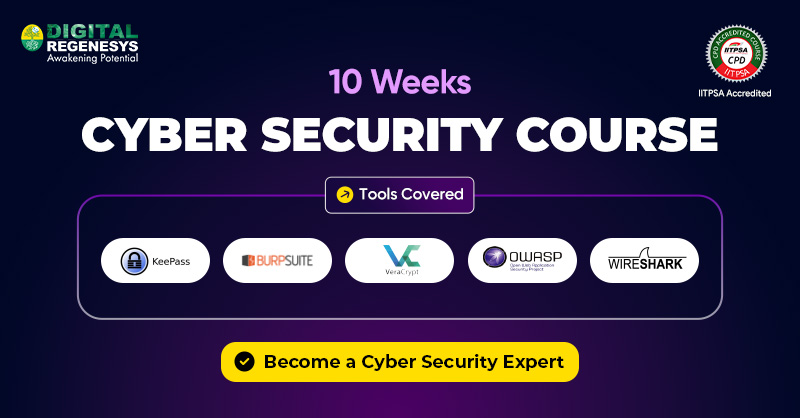
The Cybersecurity Certificate Course by Digital Regenesys is designed to prepare professionals for the realities of today’s digital world. It equips learners with both technical expertise and practical skills needed to safeguard systems, manage cyber risks, and protect valuable organisational assets. Alum stories highlight individuals who started from diverse backgrounds, some from IT, others from business or finance, and built thriving roles as analysts, consultants, or compliance specialists. Their journeys show that with dedication, the proper training, and resilience, it is possible to transition into a high-demand field and make a lasting impact.
These are the reviews given by professionals who had completed the Certification of Cybersecurity course in Digital Regenesys, who came from various career backgrounds:
Japhet Kurgat– “I completed a Cybersecurity course at Digital Regenesys. The course was highly educational, with knowledgeable facilitators who explained everything in detail. Classes were recorded and uploaded to a well-organised student portal along with study materials. After passing the exams, I received a certification that has enhanced my professional profile. I highly recommend Digital Regenesys for their excellent resources, responsive facilitators, and comprehensive learning experience.”
Chidi Igweomoke– “The Cybersecurity program was truly awesome. Despite having prior experience, I learned a lot from the instructor, who took the time to practicalize concepts I found confusing. I’ve since taken my CEHv11 exam to further build on my skills. I highly recommend this course to anyone looking to kickstart or boost their career in cybersecurity.”
Olawale Gabriel Ayorinde– “Your approach to explaining the complexities of cybersecurity was both insightful and informative, making it easier for me to grasp the fundamentals of this critical field.”
Key takeaways of This Course are as follows:
- Gain a solid foundation in essential cybersecurity principles.
- Understand and respond to real-world cyber threats with practical defence strategies.
- Develop proficiency in encryption methods and privacy tools to enhance your security and privacy.
- Build confidence in detecting and effectively managing potential threats.
- Acquire hands-on expertise in securing web applications.
- Gain practical experience using Security Operations Centre (SOC) and Endpoint Detection and Response (EDR) tools.
Read More: Which Is The Best Cyber Security Course?
Next Cybersecurity Batch Starts Soon
Join 500,000+ alumni. Live classes, real tools, IITPSA-accredited certificate.
Enrol NowConclusion
Cybersecurity in South Africa is now accessible to a broader audience than ever before. Whether you come from a technical, non-technical, or international background, there are multiple pathways to start. Knowing the cybersecurity course eligibility South Africa helps you choose the correct route, ensuring your skills and ambitions align with the course that suits you best.
The real value lies in what follows: strong career security, global opportunities, and the chance to make a real difference in protecting organisations from growing digital risks. Alum success stories demonstrate that anyone, with the right mindset and training, can enter this field and thrive. If you’re ready to pursue a permanent career, cybersecurity offers not just jobs but a meaningful journey with lasting impact.
Visit Digital Regenesys to explore more about the latest ongoing and evergreen career choices and opportunities trending in today’s job market.
Last Updated: 25 September 2025