Full-Stack Developer Roadmap 2026: 5 Skills That Matter

Full-stack developer skills now extend beyond basic frontend and backend coding. Modern developers need to understand user interfaces, server-side logic, databases, deployment and AI-assisted development to build complete digital applications.
The most valuable developers understand how an application works from the user interface to the database and deployment environment. In addition, they know how to use artificial intelligence responsibly to support coding, testing, debugging and problem-solving.
For learners who want a structured route into this field, the Full Stack Development with AI course from Digital Regenesys provides practical training in frontend development, backend programming, databases, version control and AI-assisted development. The six-month online course also gives learners opportunities to build practical applications that demonstrate their abilities.
This full-stack developer roadmap explains the five full-stack developer skills that matter most. It also shows how these skills work together and how aspiring developers can build practical experience.
What Is a Full-Stack Developer?
A full-stack developer builds and maintains different parts of a website or software application. These parts normally include the frontend, backend, database and deployment environment.
The frontend is the part that users see and interact with. By contrast, the backend processes information, applies business rules and connects the application to a database. The database stores information, while the deployment environment makes the application available to users.
Full-stack developers do not necessarily need to master every programming language or framework. Instead, they should understand how the different layers of an application communicate with one another.
This broad understanding allows them to:
- Build responsive and accessible user interfaces
- Create secure server-side functionality
- Design and connect databases
- Use APIs to exchange information
- Test, deploy and maintain applications
- Collaborate with designers, developers and other stakeholders
Why Full-Stack Developer Skills Still Matter
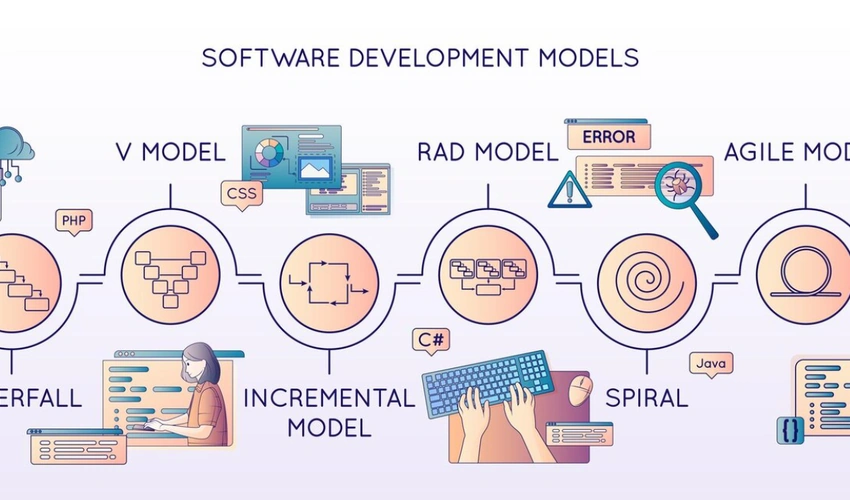
Organisations rely on websites, online platforms, mobile services and internal software to serve customers and manage daily operations. As a result, developers who understand the complete application lifecycle can contribute across several stages of a project.
These full-stack developer skills allow professionals to understand how the different parts of an application connect and function together.
A full-stack developer may help turn an idea into a working product. For example, the developer could build the user interface, connect it to an application programming interface, store information in a database and prepare the application for deployment.
Artificial intelligence is also changing development workflows. AI tools can suggest code, explain unfamiliar functions, generate test cases and assist with debugging. Nevertheless, developers still need strong technical foundations. They must review generated code, identify errors and confirm that the final application is secure and reliable.
Therefore, the strongest roadmap combines traditional programming knowledge with practical AI fluency.
Full-Stack Developer Roadmap: Five Skills That Matter
1. Frontend Development and User Experience
Frontend development focuses on the part of an application that users can see and control. This includes page layouts, buttons, menus, forms, dashboards and interactive features.
Every aspiring full-stack developer should begin with the three foundations of frontend development:
- HTML: Structures the content of a webpage
- CSS: Controls the presentation, spacing and layout
- JavaScript: Adds logic and interactive behaviour
Once these foundations are secure, learners can progress to a modern frontend library or framework such as React. However, learning a framework should not replace an understanding of core JavaScript.
Developers should also understand responsive design. A responsive application adapts to different screen sizes, including desktop computers, tablets and mobile phones.
Accessibility is equally important. Developers should create websites that people with different abilities can navigate and understand. This may include using semantic HTML, clear labels, keyboard-friendly navigation and readable colour contrast.
Practical project: Create a responsive portfolio website that includes a contact form, interactive navigation and project gallery.
2. Backend Programming and API Development
The backend is responsible for the logic that operates behind the user interface. It may process account registrations, validate login information, calculate prices, retrieve records or manage transactions.
A backend developer usually works with a server-side language or runtime. Common options include JavaScript with Node.js, Python, Java, PHP and C#.
Rather than trying to learn several backend languages at once, beginners should choose one and use it to understand important programming concepts. These include:
- Variables and data types
- Conditional statements
- Functions and reusable code
- Objects and data structures
- Error handling
- Authentication and authorisation
- Server-side validation
Backend development also involves APIs. An API allows different systems or application layers to exchange information. For example, a frontend application may send a request to an API when a user logs in. The backend then checks the information and returns an appropriate response.
Full-stack developers should understand HTTP requests, response codes, JSON data and RESTful API design. Moreover, they should learn how to test API endpoints before connecting them to the frontend.
Practical project: Build a task-management API that allows users to create, view, update and delete tasks.
3. Database Management and Data Integration
Most modern applications need to store and retrieve information. An online shop, for example, may store customer accounts, product details, orders and payment records.
Databases generally fall into two broad categories:
- Relational databases: Store structured information in connected tables. Examples include PostgreSQL and MySQL.
- NoSQL databases: Store information in flexible formats. MongoDB is a common example.
Full-stack developers do not need to become database administrators. Nevertheless, they should know how to design basic data models, create records, retrieve information and update or remove stored data.
They should also understand relationships between data. For instance, one customer may have several orders, while each order may contain several products.
Data security must form part of this skill. Developers should validate incoming information, protect sensitive records and avoid exposing database credentials within public code.
Practical project: Add a database to the task-management application so each user can save and retrieve personal tasks securely.
4. Version Control, Testing and DevOps Fundamentals
Writing code is only one part of software development. Developers also need to manage changes, test their work and deliver applications in a reliable way.
Git is one of the most important full-stack developer technologies because it records changes made to a codebase. Developers can use Git to create branches, test new features and return to an earlier version when something goes wrong.
GitHub and similar platforms allow teams to store repositories online and collaborate on shared projects. Therefore, aspiring developers should know how to:
- Create and clone a repository
- Commit changes with clear messages
- Create and merge branches
- Resolve basic merge conflicts
- Use pull requests for code review
Testing is another essential part of development. Manual testing helps developers check whether a feature behaves as expected. Automated tests can then check important functionality repeatedly as the application grows.
In addition, developers should learn basic DevOps concepts. These include environment variables, deployment, continuous integration, continuous delivery and application monitoring.
Beginners do not need to become cloud engineers immediately. However, they should be able to deploy a working project and explain how users access it.
Practical project: Store a project on GitHub, add basic tests and deploy the frontend and backend so that other people can use the application.
5. AI-Assisted Development and Critical Problem-Solving
AI skills for developers are becoming increasingly important. Coding assistants can help developers create initial code, explain errors, write documentation and generate test ideas.
However, an AI tool should support the development process rather than replace technical judgement. Generated code may contain errors, insecure patterns or solutions that do not suit the project.
Developers should learn to use AI tools for tasks such as:
- Explaining unfamiliar code
- Generating a first draft of a function
- Suggesting alternative approaches
- Creating test cases
- Improving documentation
- Finding possible causes of an error
- Refactoring repetitive code
At the same time, they should verify every important output. This requires logical reasoning, debugging ability and an understanding of the application’s requirements.
Developers must also consider privacy. Confidential customer information, passwords, proprietary code and other sensitive data should not be placed into public AI systems without appropriate permission and safeguards.
Therefore, AI fluency is not simply the ability to write prompts. It involves knowing when to use AI, how to evaluate its output and when to solve a problem independently.
Practical project: Use an AI assistant to generate test ideas for an existing application. Review each suggestion, correct inaccurate output and document which recommendations were useful.
How to Become a Full-Stack Developer
There is no single route into full-stack development. Some professionals begin with a computer science qualification, while others complete a focused course or learn through practical projects.
Regardless of the route, the learning process should follow a clear sequence.
- Learn HTML, CSS and JavaScript. Build simple websites before moving to advanced frontend frameworks.
- Choose one backend technology. Use it to understand server-side logic, APIs and authentication.
- Learn database fundamentals. Practise storing, retrieving and updating application data.
- Use Git from the beginning. Store each project in a repository and write clear commit messages.
- Build complete projects. Connect a frontend, backend and database rather than completing isolated exercises only.
- Deploy your applications. A live project gives employers or clients an opportunity to test your work.
- Use AI responsibly. Apply AI tools to improve your workflow while reviewing every output critically.
Which Programming Languages Should a Full-Stack Developer Learn?
There is no universal list of the best programming languages for full-stack development. The right choice depends on the type of application, employer and technology stack.
Nevertheless, JavaScript is a useful starting point because it can be used on both the frontend and backend. A learner can use JavaScript in the browser and Node.js on the server.
Python is another useful option for backend development. It is known for readable syntax and is also widely used in automation, data science and artificial intelligence.
Other options include Java, C#, PHP and Ruby. Instead of changing languages frequently, aspiring developers should develop confidence in one stack. Once they understand the underlying concepts, learning another language becomes easier.
How Long Does It Take to Learn Full-Stack Development?
The learning period depends on previous experience, study time and the level of proficiency required. A beginner can learn core concepts within several months. However, becoming confident enough to solve unfamiliar problems takes continued practice.
A structured six-month course can provide a clear starting point. Even so, learners should continue building projects after completing the formal programme.
Consistency matters more than rushing. A learner who codes regularly, reviews errors and improves existing projects will usually progress more effectively than someone who only watches tutorials.
How to Build a Full-Stack Developer Portfolio
A portfolio should demonstrate what you can build and how you approach technical problems. Therefore, it should contain complete projects rather than certificates alone.
A strong beginner portfolio may include:
- A responsive personal website
- A task-management application
- An online booking system
- A small e-commerce application
- A dashboard that retrieves information from an API
Each project should include a clear description, screenshots, a live demonstration and a link to the code repository. Additionally, the project documentation should explain the tools used, the problem solved and any important technical decisions.
Employers also value evidence of improvement. Consequently, learners should revisit early projects, correct weaknesses and add better security, testing or accessibility.
Go From Curious Coder to Full Stack Developer
Learn React, Node.js & MongoDB with AI-assisted coding and deployment.
Explore ProgrammeIs Full-Stack Development a Good Career in South Africa?
Full-stack development can be a suitable career for people who enjoy technology, continuous learning and practical problem-solving. These professionals may work for software companies, financial institutions, retailers, consulting businesses, public organisations or startups.
Possible roles include:
- Junior full-stack developer
- Web application developer
- Frontend developer
- Backend developer
- Software developer
- Application support developer
Full-stack developer salaries in South Africa vary according to experience, location, industry, technical ability and the complexity of the role. Therefore, published salary figures should be treated as estimates rather than guaranteed earnings.
Practical ability can significantly influence career progress. A recognised certificate may strengthen a CV, but employers are also likely to consider a candidate’s portfolio, communication skills, coding ability and approach to problem-solving.
For more information about local career opportunities, read how to become a full-stack developer in South Africa.
Study Full Stack Development with AI
The five skills in this roadmap are connected. Frontend development creates the user experience. Backend programming manages the application logic. Databases store information, while version control and DevOps practices support collaboration and delivery. Finally, AI-assisted development can improve productivity when it is used responsibly.
Digital Regenesys offers a six-month Full Stack Development with AI course for learners who want structured, practical training.
The programme covers frontend and backend development using technologies such as React, Node.js, Express and MongoDB. It also includes version control, application integration, DevOps fundamentals and AI-assisted development workflows.
Learners complete practical projects that can help demonstrate their skills. Successful participants receive an IITPSA-accredited certificate with 30 CPD points.
Explore the course and begin building practical, job-relevant full-stack developer skills.
Next Full Stack Batch Starts Soon
Join 500,000+ alumni. Project-based, portfolio-ready, career-focused.
Enrol NowConclusion
A successful full-stack developer does not need to know every available technology. Instead, the developer needs a reliable foundation and the ability to understand how different application layers work together.
The five most important areas are frontend development, backend programming, database management, version control and DevOps, and AI-assisted problem-solving.
Start with one technology stack and use it to build complete applications. Then, test your work, deploy your projects and continue improving them. This practical approach can help you develop a stronger portfolio and prepare for opportunities in software and web development.
Last Updated: 16 July 2026