How to Become a Cybersecurity Engineer in South Africa?

Career prospects in the cybersecurity field are improving worldwide, driven by the ongoing tech revolution. Building a future in this field is becoming increasingly popular as more professionals focus on protecting systems and data from cyberattacks.
With technological advancement, the cases of digital theft and attacks are also increasing. The world nowadays chooses digital platforms for personal data storage. This has led to a sharp increase in serious issues, such as tampering with sensitive information, theft of personal data, and malicious hacking of computer systems.
To combat this rising tide of threats, you need a special kind of protector – the digital superhero, i.e. ‘Cybersecurity Engineer.’ In this article, you will learn how to become a Cybersecurity engineer in South Africa.
The Role of a Cybersecurity Engineer
Cybersecurity engineers are responsible for securing sensitive information and protecting systems from cyber threats. They respond to digital incidents and reduce the risk by using a few tools, frameworks and processes.
The number of cybercrimes is increasing, and thus, the role of the Cybersecurity engineer in South Africa is becoming more crucial.
These engineers can be found in different organisations, ranging from banks and telecommunications to retail, healthcare, and government departments. Before getting into the roles and responsibilities, it’s important to understand the educational and practical requirements to become a Cybersecurity engineer.
Below are the key steps you need to follow:
1. Build a Strong Educational Foundation
Be it any role, it is very important to get onto the right learning pathway. Many learners start with a formal qualification, whereas others take shorter routes depending on their background and objectives.
This foundation helps one understand the basic elements within the sphere before developing special skills.
Let’s look into what this step involves:
- Bachelor’s degree or equivalent foundation: A degree in computer science, information technology, or a related field provides a strong foundation. It involves education in networking, databases, programming, and system behaviour. These topics then lead into more complex security concepts.
- Alternative Learning Paths in Cybersecurity: Some learners start with short courses or bridging options that help to introduce them to the core concepts of cybersecurity. Digital Regenesys offers an industry-relevant Certification Course in Cybersecurity, with practical knowledge even for beginners. These courses are ideal for working professionals or career changers as they allow you to gain critical skills without requiring a full-time degree.
Read More: Is Cybersecurity in Demand in SA?
2. Hard Core Cybersecurity Skills
Working in South Africa requires developing a blend of technical and analytical skills in cybersecurity engineering. These skills will help identify risks, understand system behaviour, and apply appropriate solutions. When you have your basics clarified, upward expansion in a technical field becomes easier.
Competencies to be developed are as follows:
- Understanding Operating Systems and Networks: A cybersecurity engineer should know how systems communicate and how networks transmit data. This also means operating system behaviour, network protocols, firewalls, and routing. Knowledge of networking and OS allows the engineers to diagnose problems quickly and take action against attacks.
- Basic Programming Knowledge: Programming is not about writing long scripts; it is about understanding how systems operate behind the scenes. Languages like Python support tasks such as automation, security testing, and log analysis. Knowledge of coding also helps you work more comfortably with tools used in modern security operations.
- Security Principles and Risk Awareness: You need a strong understanding of security frameworks and common threats. Besides learning about the different types of malware, access controls, and cryptographic principles, these concepts will guide your decision-making and help you assess whether systems are secure. Strong risk awareness also helps you support teams with practical recommendations.
3. Get Practical Experience in Cybersecurity
Practical experience helps you understand security concepts and their application in real-world environments. Employers want people who can apply technical knowledge, respond to threats, and work within security policies. Hands-on exposure develops confidence and prepares you for higher roles.
The following are ways one can get experience:
Internship and Entry-Level Opportunities: The common pathway in this field typically starts with work as a security analyst, network technician, or related role. These positions help you to learn about real-time incidents. You will also understand how systems usually behave during an attack.
- Home Labs and Personal Projects: Many learners develop their skills by building simple labs at home. You can build virtual machines, use open-source tools, and do online exercises to try finding vulnerabilities. Personal projects allow you to safely test techniques and experiment with a variety of security tools.
4. Obtain Industry-Recognised Certifications
Certifications help validate your skills and demonstrate to employers that you meet industry standards. These certifications are not mandatory, but they can make you more competitive when applying for security roles. Working from basic to advanced helps in building a structured learning path.
Here are a few of the common options:
- Entry-Level Certifications for Beginners: There are a few entry-level certifications that are ideal for learners looking to gain confidence and learn the basics of the field. These certifications also support job applications because employers trust recognised learning frameworks.
- Intermediate and Advanced Options: Once you gain experience in the field, you can pursue technical certifications, such as Ethical Hacking or forensic analysis. These certifications demonstrate your competence in managing complex security tasks and making informed, high-level decisions.
Learn to Outsmart Every Cyber Threat
Learn network security, risk assessment & real tools, guided by expert mentors.
Explore Programme5. Explore career growth and cybersecurity salaries in SA
Cybersecurity salary in SA depends on experience, skills, and also on the size of the organisation. An entry-level position offers only a modest income, but the amount rises substantially with years of work experience. Knowing your salary range helps in planning your training and long-term goals.
The following are the key highlights to note:
- Junior roles initiate with competitive salary ranges compared to other IT fields in South Africa.
- Mid-level and senior cybersecurity engineers can earn higher salaries, especially in the finance, telecoms, and corporate sectors.
- Continuous learning improves your earning ability over time.
Read More: Cybersecurity Career in South Africa
6. Learn about Cybersecurity certifications in SA through Digital Regenesys
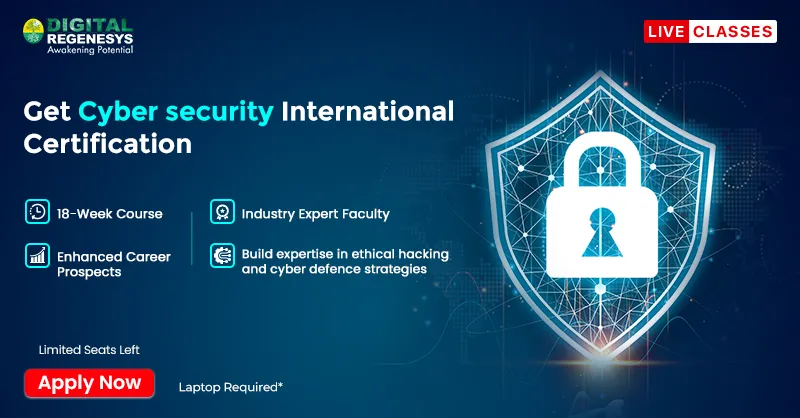
Digital Regenesys offers a practical Certification Course in Cybersecurity structured to help you develop sound technical knowledge. The course lays the foundation in security concepts that will help both beginners and professionals grow. It also has some practical tasks that help you grow your confidence with every step forward.
To give you a fair idea of what you will cover, here are some of the major areas included in this Cybersecurity course in South Africa:
- Fundamentals of system security and the manner of securing digital environments
- Network protection techniques: firewalls, monitoring, and defence mechanisms
- Incident Response practices to detect, contain, and recover from security breaches
- Practical exercises that allow you to apply your learning in realistic scenarios.
Read More: Benefits of Cybersecurity Online Short Courses

Next Cybersecurity Batch Starts Soon
Join 500,000+ alumni. Live classes, real tools, IITPSA-accredited certificate.
Enrol NowConclusion
Becoming a Cybersecurity engineer in South Africa is achievable with the right combination of education, skills, and hands-on experience. By understanding your learning path and investing in practical training, you’re setting yourself up for a rewarding and stable career.
With all organisations focusing on strengthening their digital defences, cybersecurity engineers are increasingly playing an important role in protecting critical data.
Begin your learning journey through the Digital Regenesys Certification Course in Cybersecurity for a valuable future in cybersecurity.
Last Updated: 6 February 2026