How to Get a Global Remote Role From Tanzania
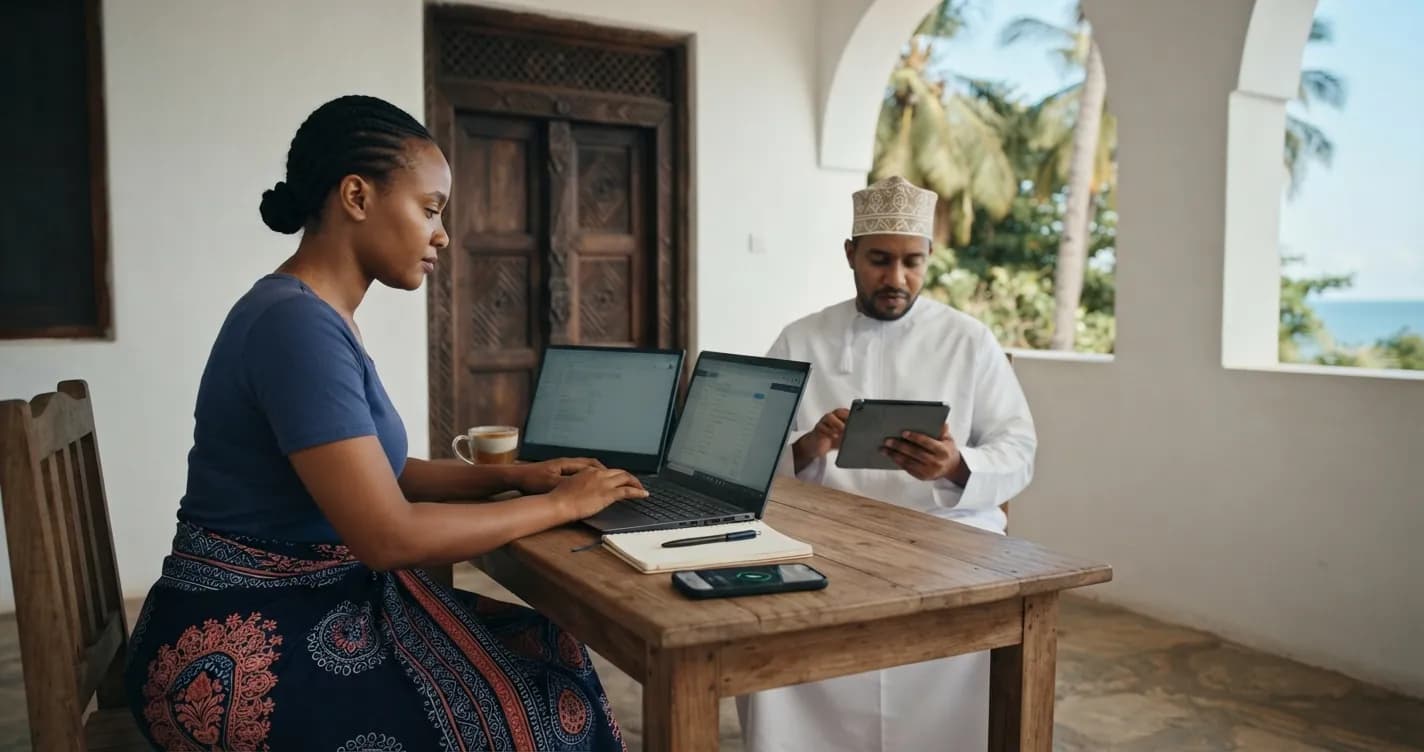
Getting a global remote role from Tanzania is realistic, and the infrastructure is no longer the obstacle people assume it is. 4G now covers more than 94% of the population and the country has over 20 million internet users. What decides the outcome is whether you hold a skill an international employer recognises, whether you can prove it, and whether you are looking in the right places. This guide covers the skills that travel, which platforms are worth your time in Tanzania and which are not, how to use LinkedIn when the local network is small, how to handle time zones, and how Tanzanians get paid from abroad.
A Global Employer Hires the Skill First, Not the Country
Before you start applying for remote jobs, look at the skill you are offering to an employer. A company hiring remotely from Dublin, Dubai or Toronto is not hiring only within Tanzania. You may be competing with applicants from Egypt, the Philippines, Poland and many other countries.
That makes your location only one part of the picture. Employers still need someone who can solve a particular problem, use the tools required for the role and show evidence of their work.
Some skills are easier to take into the international market because the work is not tied to one country’s systems. These include:
- Software development and Fullstack, where employers use many of the same programming languages, development tools and workflows across countries.
- Cloud engineering, particularly skills involving AWS, Microsoft Azure or Google Cloud.
- Data analysis and data science, using tools such as SQL, Python, Excel and Power BI.
- Cybersecurity, where organisations in different countries face many of the same types of digital threats.
- Digital marketing, including SEO, paid advertising and content marketing for online audiences.
- UI/UX design, where your portfolio can demonstrate your ability to create and improve digital products.
Other skills can still be valuable but may require local knowledge. Work that depends on Tanzanian laws, regulations, professional licences or physical presence is harder to offer to an overseas employer. Examples include roles that require knowledge of Tanzanian tax rules, local legal requirements or services that must be performed in person.
The question to ask is not simply, “Can I work remotely?” Ask, “What problem can I solve for an employer anywhere in the world, and what can I show them that proves it?”
Two things turn a claimed skill into a recognised one: an accredited qualification an employer can verify, and documented work showing you have used it. Our guides on digital skills to learn based on your hobbies and DevOps courses in Tanzania cover where to start.
Where Are Global Remote Jobs Posted?
The platforms you use can make a difference when you are looking for work outside Tanzania. Focus on sites where international companies regularly advertise remote roles, and spend more time on the ones that match your field.
LinkedIn should be one of your main places to search. Look for your specific skill or job title and add “remote” to your search. Check the location requirements carefully because some companies accept applications from Tanzania while others only hire within certain countries.
Wellfound is useful for finding jobs at startups. Many of the roles are in technology, data, design, marketing and other digital fields. Read the full job description to see where the company can hire and what they expect from applicants.
Remote.co focuses on remote jobs, making it another useful place to search. You can find roles from companies that already work with remote teams, but you still need to check whether the position is open to people living in Tanzania.
Indeed gives you access to a large number of job listings. Search for your role together with “remote” and then check the location, time zone and other requirements before applying.
X is different in Tanzania. Its user base is much smaller than in Kenya and Nigeria, so relying on Tanzanian accounts alone may give you fewer opportunities. Instead, use X to follow international recruiters, founders and people working in your field. You may come across job announcements, referrals or hiring conversations that lead you to a company you would not have found through a job board.
The main three to check regularly are LinkedIn, Wellfound and Remote.co. Use Indeed to widen your search and X to discover conversations and opportunities outside the usual job boards. Set aside time each week to check for new roles and apply while the positions are still open.

How Should Tanzanians Use LinkedIn?
Make LinkedIn work for you
About 1.70 million Tanzanians use LinkedIn, which is roughly 4.7% of adults. That is a smaller professional network than Kenya or Nigeria, so your approach to LinkedIn can be different.
With fewer people actively building their professional presence, a complete profile can have more room to stand out. This does not mean getting a remote job is easy, but it does mean there is value in making your profile clear, specific and active.
Before you start applying, check these five things:
- Put your main skill in your headline: “Data Analyst, SQL and Power BI, open to remote roles” tells an international recruiter what you do straight away.
- Switch on “Open to Work” and select remote: Add the countries or regions where you are willing and able to work.
- Use your About section to explain your work: Tell a new visitor what you do, what you have worked on and what type of role you are looking for.
- Show results with numbers: Instead of saying you “managed social media,” explain what changed, such as increasing website visits by 30% or reducing reporting time from five hours to two.
- Share useful work-related posts: Talk about a project you completed, a problem you solved or something you learned. In a smaller professional network, useful posts can help more people discover what you can do.
Digital Regenesys offers career and profile guidance alongside its accredited programmes, which helps when you need to present a newly acquired skill to employers who have never heard of your current company.
Is Tanzania’s Connectivity Good Enough for Remote Work?
Internet access is an important part of working remotely, but it should not stop you from applying for international roles. As of March 2026, Tanzania had 111.9 million telecom subscriptions and 58.9 million internet subscriptions. 4G coverage reached 94.32% of the population, while smartphone penetration stood at 42.5%. Monthly data traffic had also passed 932 petabytes.
For most remote jobs, the important thing is having a connection that can support your work, a laptop that works reliably and a quiet place where you can focus. Your setup does not have to be expensive, but it needs to work consistently.
Think about what you will do when something goes wrong. A second SIM card from another network can help when your main connection drops. A laptop power bank or another backup power source can keep you working during an outage. A nearby co-working space can also give you somewhere to work when your usual setup is unavailable.
You do not need to wait until an employer asks about these things. Knowing your backup options shows that you have thought about the practical side of working remotely from Tanzania.
Does Tanzania’s Time Zone Work for Remote Roles?
Skills That Open Real Job Doors
Explore in-demand courses mapped to real job roles and career growth.
Explore ProgrammesYour time zone can help
Tanzania uses East Africa Time (EAT), which is UTC+3. This puts you in a useful position when working with teams across several regions.
- The Gulf: Tanzania is in the same time zone as Dubai and one hour behind Doha, making regular meetings and shared working hours straightforward.
- Europe: You are a few hours ahead of much of Western Europe, so your working day overlaps with a large part of the European workday.
- India and Pakistan: Your afternoon overlaps with their later working hours, which can work well for teams spread across East Africa and South Asia.
- The United States: Your afternoon falls during the morning on the US East Coast, giving you some overlap for meetings and collaboration.
You do not need to make your location sound like a problem. When applying, state your time zone and the hours you are available to work. This gives an international employer a clear idea of when they can expect you online and makes it easier to assess whether your schedule fits the team.
How Do Tanzanians Get Paid From Abroad?
Getting a remote job with an international company also means working out how your earnings will reach you in Tanzania. Depending on the employer, you may be paid through a contractor or payroll platform, receive an international bank transfer, or use another payment service supported by the company.
Ask about payment during the interview process. Find out whether you will be hired as an employee or contractor, what currency you will be paid in, how often you will receive your money and which payment method the company uses. These details can affect the amount you actually receive each month.
Pay attention to fees too. Currency conversion, bank charges and transfer fees can reduce what reaches your account. A small charge may not seem important once, but it can add up over several months. Before accepting an offer, understand the costs attached to the payment method available to you.
You should also understand your tax position in Tanzania. Being paid by a company outside Tanzania does not automatically mean the income falls outside Tanzanian tax rules. Your obligations can depend on your circumstances and how the work is structured, so speak to a qualified Tanzanian accountant or tax professional before making assumptions.
Mobile money is widely used for everyday payments in Tanzania, but an international employer may use a bank account or contractor payment platform to pay you. Ask the employer exactly how the money will be sent and make sure you have a way to receive it before your start date.
How Do You Actually Get Hired?
- Pick one skill and go deep, specialists beat generalists on international shortlists.
- Get an accredited qualification, so the skill is verifiable rather than asserted. Check which online courses are recognised in Tanzania, or browse the full range of online courses.
- Build two or three documented projects, Evidence outweighs claims, particularly when your current employer is unknown abroad.
- Fix LinkedIn before you apply anywhere, Recruiters check it after every application.
- Apply consistently and early, Remote roles attract large volumes and close quickly.
- Prepare for written interviews, Distributed teams run on writing, and many employers test it directly before any call.
Our guides on digital marketing career paths in Tanzania and how to become an SEO specialist in Tanzania set out two full routes in.
Next Course Intake Starts Soon
Join 500,000+ alumni building career-ready skills across top industries.
Enrol NowConclusion
Tanzania has the connectivity and the time zone for global remote work. What is usually missing is a recognised skill and a profile that lets someone abroad find you.
Three things to take away:
- The skill comes first. Nothing else on this list matters without something an international employer needs.
- Spend your time on LinkedIn, Wellfound and Remote.co. X is too small in Tanzania to be worth building a job search around.
- A small LinkedIn network works in your favour. A well-built profile stands out here far faster than it would in a crowded market.
Last Updated: 24 September 2026